
Wike Rewrites FCT Traditional History, Upgrades Monarchs, Gifts SUVs
…Tinubu ends 29-year wait for promotion of traditional stools
…Minister vows to upgrade more chiefdoms
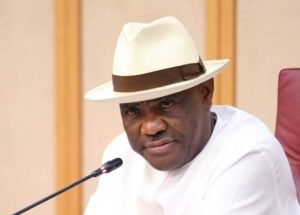
The Minister of the Federal Capital Territory (FCT), Nyesom Wike, has announced plans to upgrade more traditional chiefdoms and construct befitting palaces for first-class traditional rulers in the territory as part of efforts to strengthen traditional institutions.
Wike also promised additional official vehicles and logistical support for traditional rulers, saying the interventions were designed to restore the dignity of the traditional institution and enhance its contributions to peace, security and grassroots development.
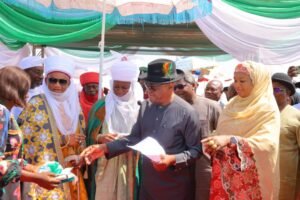
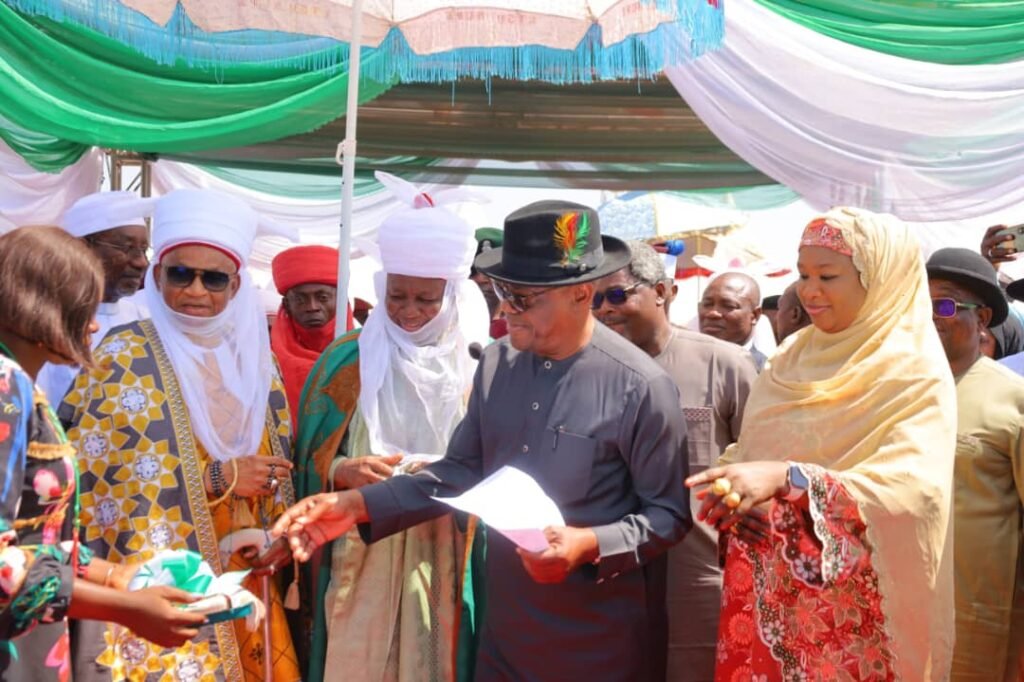
The minister made the announcement on Friday in Abuja during the presentation of certificates, letters of office, staffs of office and brand-new Sports Utility Vehicles (SUVs) to newly elevated first- and second-class traditional rulers from the 16 chiefdoms in the FCT.
The ceremony marked a historic development for the territory’s traditional institution, ending nearly three decades of agitation for the elevation of traditional stools.
Wike recalled that since the establishment of the FCT Traditional Rulers Council in 1997, only the stool of the Ona of Abaji had been elevated, leaving other traditional rulers waiting for recognition.
He attributed the latest development to President Bola Tinubu’s approval under the Renewed Hope Agenda, describing it as a demonstration of the administration’s commitment to inclusive governance.
According to him, Tinubu believes traditional rulers must be recognised as important partners in governance, particularly because of their influence at the grassroots.
The minister dismissed criticisms that providing official vehicles to traditional rulers amounted to bribery, arguing that their responsibilities in community mobilisation, conflict resolution and security management justified the support.
He questioned why political officeholders and government appointees enjoyed official vehicles while traditional rulers, who play critical roles in maintaining peace and stability, should be denied similar privileges.
Wike maintained that traditional institutions remained indispensable to governance, stressing that government development initiatives could hardly succeed without the cooperation of community leaders.
He also recalled that shortly after assuming office in 2023, Tinubu directed the FCT Administration to engage traditional rulers and stakeholders across the six area councils to identify their pressing needs.
He said the administration had since responded to several requests, including road construction, police stations and residential accommodation for security personnel.
On further improvements, Wike disclosed that additional traditional chiefdoms would be considered for elevation, while befitting palaces for all first-class traditional rulers would be captured in the 2027 budget, subject to available funds.
He added that the intervention would subsequently be extended to second-class traditional rulers.
The minister also directed chairmen of the six area councils to provide adequate logistical support, particularly fuel, to ensure effective utilisation of the newly presented vehicles.
Speaking at the event, Chairman of the Senate Committee on FCT, Senator Ibrahim Mohammed Bomai, congratulated the upgraded monarchs and urged them to justify their new status through inclusive leadership, fairness and commitment to their communities.
He particularly encouraged the traditional rulers to give women and young people greater opportunities to participate in decisions affecting their communities.
Similarly, Chairman of the Senate Committee on FCT Area Councils and Ancillary Matters, Senator David Jimkuta, commended Tinubu and Wike for recognising the importance of traditional institutions.
He described the provision of official vehicles as a practical intervention that would improve the mobility of traditional rulers and enable them to discharge their responsibilities more effectively.
Jimkuta, however, urged Wike to convey to the President the need to provide befitting palaces for the monarchs.
The Minister of State for FCT, Dr Mariya Mahmoud, described the ceremony as a significant milestone in the administration’s efforts to strengthen traditional institutions and promote inclusive governance.
She commended Tinubu for his commitment to grassroots development and Wike for extending the administration’s interventions beyond physical infrastructure to institutional empowerment.
Earlier, the Etsu Nupe, Alhaji Yahaya Abubakar, who chairs the coordinating committee of the National Council of Traditional Rulers of Nigeria, applauded Wike for addressing some of the longstanding challenges confronting traditional institutions.
Abubakar said the vehicles would ease the difficulties traditional rulers faced in travelling across their domains to attend to their subjects and perform their traditional responsibilities.
He, however, urged the upgraded monarchs to demonstrate greater commitment to service, cooperation and peaceful coexistence.
Also speaking, the Ona of Abaji, Alhaji Adamu Baba Yunusa, who represented the FCT Council of Chiefs, praised Wike for restoring dignity and recognition to the traditional institution.
Speaking on behalf of the newly elevated first-class chiefs, the Sarkin Karshi, Alhaji Ismaila Mohammed, described the development as the fulfilment of a struggle that began in 1997.
He recalled that some traditional rulers who championed the agitation had died without witnessing its actualisation, expressing gratitude that their longstanding demand had finally been met.
Similarly, the Emir of Jiwa, Alhaji Idris Musa, who spoke for the upgraded second-class chiefs, urged his colleagues to measure their relevance by their contributions to peace, service and community development rather than their traditional titles alone.
In her welcome address, Director of Administration and Finance, Area Council Services Secretariat, FCTA, Omolola Olanipekun, described the ceremony as a historic correction of a longstanding gap in the FCT’s traditional governance structure.
She noted that despite the delay in their elevation, traditional rulers had continued to serve as custodians of culture, mediators in communal disputes and promoters of peace at the grassroots.
Olanipekun urged the newly elevated monarchs to sustain their partnership with the FCT Administration and contribute meaningfully to the development and stability of their respective communities.
About The Author