
Ilú’Bìnrin Concludes Breast Cancer Awareness Campaign with Survivor’s Story of Courage, Hope and Healing
By Temilade Aloko
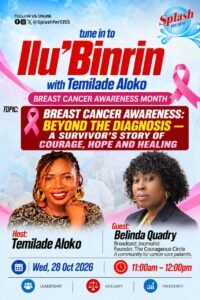
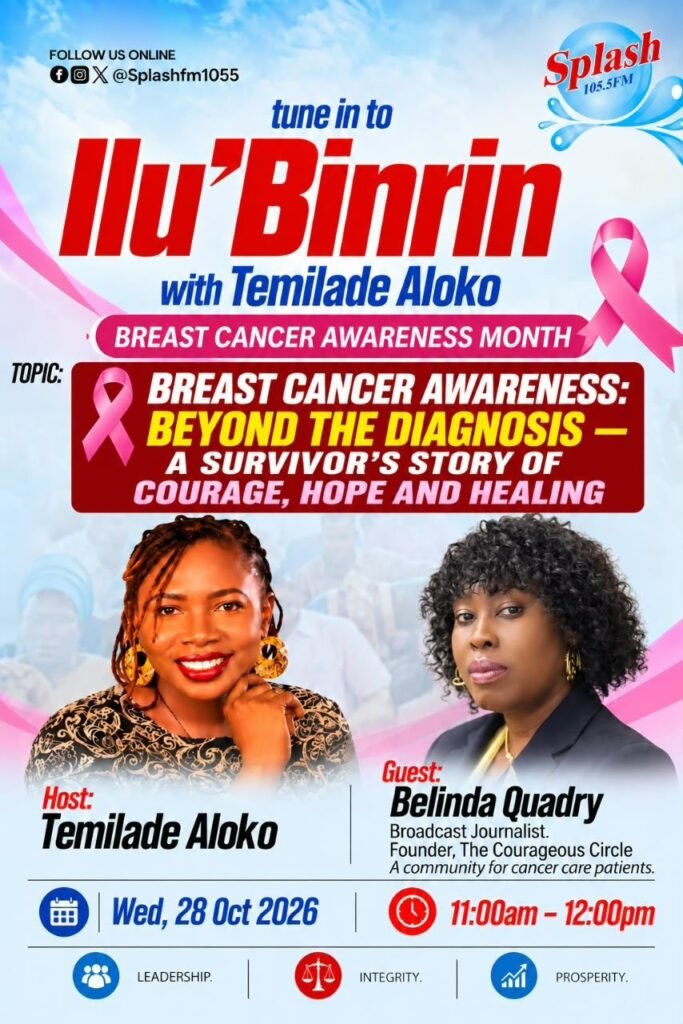
Ibadan- As Ilú’Bìnrin on Splash FM 105.5, Ibadan, rounded off its Breast Cancer Awareness Month campaign, a breast cancer survivor, Mrs Belinda Quadry, has called for greater support for cancer patients, urging the government to subsidise treatment costs and making a case for stronger family support for people living with the disease.
Quadry, a broadcast journalist and founder of The Courageous Circle, a community for cancer care patients, shared her personal journey with breast cancer during the programme, highlighting the physical, emotional and financial challenges she faced and the importance of having people who stand by patients throughout treatment.
Speaking with the host of Ilú’Bìnrin, broadcast journalist Temilade Aloko, Quadry emphasised that a cancer diagnosis should not be seen as a death sentence, noting that many women have survived the disease and that others can overcome it with appropriate care and support.

She encouraged women to pay attention to their health, maintain a balanced diet and regularly become familiar with their breasts so they can notice unusual changes. She advised anyone who discovers a lump, persistent discomfort or another unusual breast change to seek prompt medical assessment and undergo any recommended tests.
Quadry also stressed the importance of healthy eating, noting that diet plays a significant role in general wellbeing. She encouraged people to be intentional about their food choices while emphasising the need for proper medical care when health concerns arise.
Reflecting on her experience, the survivor disclosed that her journey was far from easy, describing it as emotionally demanding and financially draining. She explained that the cost of cancer treatment can place enormous pressure on patients and their families, with some struggling to afford the care they need.
She called on the government to take more decisive steps to reduce the cost of cancer treatment, expressing concern that some patients may lose their lives because they cannot afford the investigations, medicines and other services required for their care.

According to her, improving access to affordable treatment would give more patients the opportunity to receive appropriate medical attention and complete their prescribed treatment.
Quadry also spoke about the importance of having a reliable support system during the cancer journey. She acknowledged the support she received from her husband and a friend and colleague, explaining that their presence and encouragement helped her through difficult moments.
Her experience, she suggested, underscores the importance of standing by people diagnosed with cancer rather than allowing fear, stigma or misconceptions to isolate them. She encouraged families to provide emotional, practical and financial assistance where possible, noting that patients need understanding and reassurance as they navigate treatment and recovery.
The programme’s concluding episode reinforced the message that breast cancer awareness must go beyond recognising the disease. It must also encourage early medical assessment, access to appropriate treatment, emotional support and sustained public education.
A Month of Awareness, Education and Action
The final episode brought to a close a series of breast cancer awareness discussions on Ilú’Bìnrin that began on October 7.
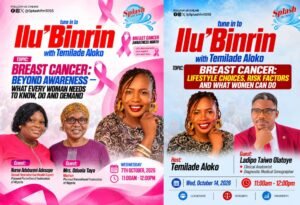
The campaign opened with Nurse Ade bunmi Adesope, a sexual and reproductive health expert, and Mrs Tayo Oduola, a matron, both from the Planned Parenthood Federation of Nigeria (PPFN). They discussed the topic, “Breast Cancer: Beyond Awareness — What Every Woman Needs to Know, Do and Demand,” highlighting the importance of moving beyond general awareness to informed action, understanding breast changes and seeking timely medical attention.
On October 14, the programme featured Ladipo Taiwo Olatoye, a clinical anatomist and diagnostic medical sonographer, who discussed “Breast Cancer: Lifestyle, Risk Factors and What Women Can Do.” The conversation explored lifestyle considerations, risk factors and the importance of appropriate medical assessment and diagnostic investigations.
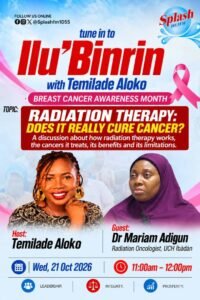
The campaign continued with Dr Mariam Adigun, a Radiation Oncologist at the University College Hospital (UCH), Ibadan, who spoke on radiation therapy and its role in cancer treatment. Under the topic “Radiation Therapy: Does It Really Cure Cancer?” she explained how radiation therapy works, its benefits and limitations, possible side effects and the importance of completing prescribed treatment.
Dr Adigun also highlighted the financial challenges confronting cancer patients, called for improved access to modern treatment facilities and addressed misconceptions about radiation therapy. She emphasised the importance of proper diagnosis, including histology and other tests that help medical professionals determine the nature of a cancer and select appropriate treatment options. She further encouraged family support and drew attention to available assistance schemes that eligible patients may explore.
The campaign concluded with Quadry’s survivor story, bringing a personal perspective to the medical information shared throughout the month. Her account highlighted the realities of living through cancer treatment and the role of hope, family support and access to care in the recovery journey.
Through these conversations, Ilú’Bìnrin, hosted by Temilade Aloko on Splash FM 105.5, Ibadan, sought to equip women with knowledge about breast cancer, from understanding risk factors and recognising unusual breast changes to diagnosis, treatment, side effects and recovery.
As the campaign ends, its message remains clear: women should take their breast health seriously, seek professional medical attention when they notice unusual changes and follow appropriate medical advice. Families and communities also have a role to play in supporting patients, while government and healthcare stakeholders must continue working towards more accessible and affordable cancer care.
The conclusion of the campaign is not the end of the conversation. It is a reminder that awareness must lead to action, patients deserve support, and a breast cancer diagnosis should be met with timely care, compassion and hope.
About The Author