
OSUN 2026: DID THE PEOPLE REALLY SPEAK?
Fear,Power, Adeleke, Aregbesola and the Battle for Osun
By Temilade Aloko
16/08/2026
There was anxiety.
There was fear.
There were threats. There were attacks. There was faith.
There was hope.
And above all, there was the question that hung over Osun State as voters went to the polls on Saturday, August 15, 2026:
Who would win, and what would the outcome mean for the people of Osun?
August 15 was another day for residents of Osun to decide who would pilot the affairs of the state for the next four years.
But this was not an election that came without fear.
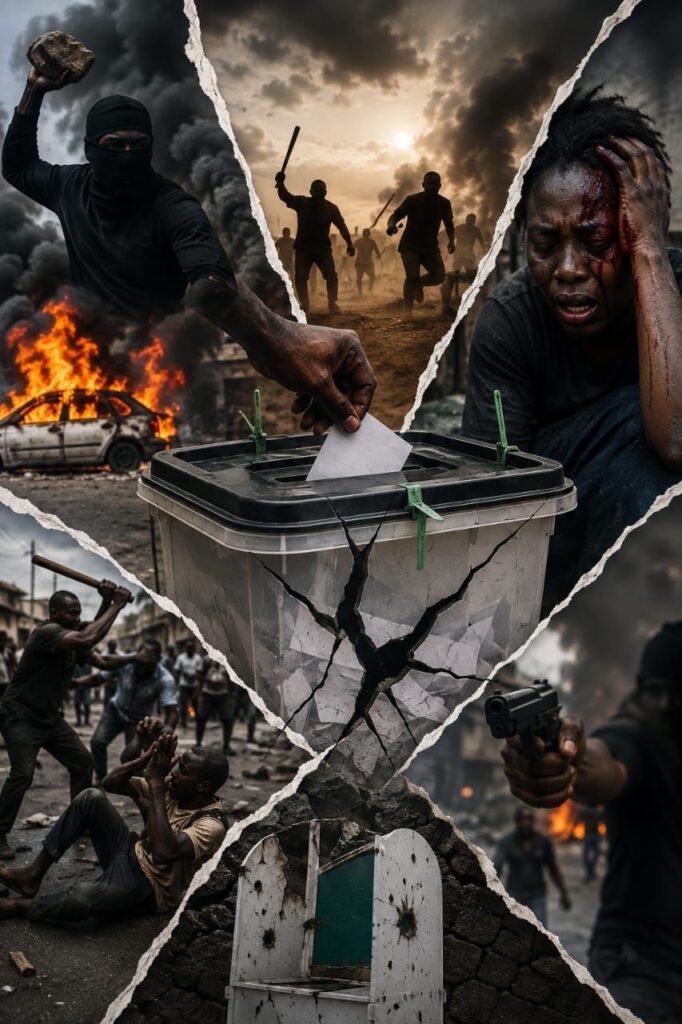
There had been a series of attacks and heated exchanges in the build-up to election day. The political temperature became particularly high between the two major camps — Governor Ademola Adeleke’s Accord and the All Progressives Congress (APC), whose candidate was Bola Oyebamiji.
There were moments when political statements became so threatening that people began asking:
What kind of people are we voting for to represent us?
Few days to the election were particularly scary.
For ordinary residents, it was no longer just about who would win. It was also about whether they would be safe enough to go out and vote.
But on August 15, the people came out.
They queued.
They waited.
They voted.
And eventually, the result was announced.
THE MEMORY OF HALF SALARY
To understand the 2026 Osun election, one must understand the history of the state and, especially, the experience of its workers.
Osun residents have had their own fair share of governance under different administrations.
During the administration of former Governor, Ogbeni Rauf Aregbesola. The state went through the controversial period of half salary and salary deductions.
For a state where civil servants form a significant part of the population, the issue of salary was never just a political slogan. It was about survival.
Gboyega Oyetola succeeded Aregbesola. His administration continued the payment of full salaries, but inherited salary arrears remained a major issue.
Then came Ademola Adeleke.
For many civil servants, his administration was seen as a relief because it began paying the inherited salary arrears. The Adeleke administration has repeatedly highlighted the payment of the inherited half-salary arrears as one of its major achievements.
For a worker who had waited for years to receive money owed, this was not just a government announcement.
It was money.
It was relief.
And for some voters, it may have become part of the decision they made at the polling unit.
THE ADELEKE FACTOR
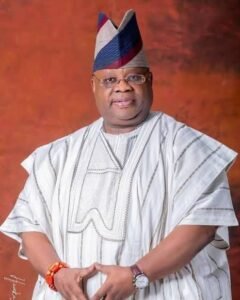
But Osun politics cannot be explained by salary alone.
There is also the Adeleke factor.
From the days of Chief Raji Ayoola Adeleke to the late Senator Isiaka Adeleke, popularly known as Serubawon, the Adeleke family has had a strong political connection with the people of Osun.
That love has extended to Ademola Adeleke.
His supporters see him as someone who understands the people and has built a personal relationship with the grassroots.
His opponents, however, have raised questions about his style of governance, competence and the influence of the Adeleke family in the affairs of the state. There have also been allegations concerning the influence of the Adeleke family in state resources and political affairs.
But an election is rarely decided by one issue.
It is usually a combination of many things — performance, personality, party structure, family name, political alliances, grassroots mobilisation and the personal experience of the voter.
And this is where the 2026 Osun election becomes interesting.
IS DANCING A POLITICAL CRIME?
Perhaps one of the most discussed aspects of Governor Ademola Adeleke’s public image is his love for dancing.
To some people, the dancing makes him look unserious.
To others, it makes him relatable.
But the question is:
Is dancing a crime?
Is it against the law for a public office holder to enjoy his hobby?
Does a governor’s ability to dance have anything to do with his ability to govern?
Perhaps the real measurement should be what the governor does with public resources, how he treats workers, what policies he introduces, the state of infrastructure, accountability and the quality of life of the people.
A governor can dance and still govern.
INEC also repeatedly promised a free, fair and credible election and said it was logistically, technologically and operationally prepared for the exercise.
A governor can also be quiet and serious-looking and still perform poorly.
Perhaps we should judge public officers more by what they do in office than by the hobbies they display in public.
THE MONARCHS: DOES THE CROWN STILL CARRY WEIGHT?
Then there is another important part of Osun politics that cannot be ignored:
The traditional institution.
For generations, traditional rulers have played important roles in Yoruba communities.
The palace is not just a place where kings sit.
For many people, the words of a Kabiyesi still carry respect.
But the 2026 election raised a new question:
Does the endorsement of a traditional ruler still carry the same political weight it once carried?
Throughout the election period, some traditional rulers publicly showed support for candidates.
While Some traditional institutions maintained neutrality.
This brings another question:
When a traditional ruler openly supports a political candidate, does the endorsement move the people, or does it only represent the personal choice of the monarch?
And what happens when a monarch’s political preference appears to go against the traditional institution’s expected neutrality?
Perhaps the 2026 election has shown that the traditional institution still commands respect, but respect does not necessarily mean automatic transfer of votes.
The people may listen to their kings.
But when they get to the polling unit, they still have the power to decide.
That may be one of the biggest changes in modern Yoruba politics.
THE FEDERAL MIGHT QUESTION
Before the election, another question dominated political conversations:
Would federal might determine the outcome?
Some political observers believed the influence of the Federal Government and the APC at the centre could affect the election.
Some even linked this discussion to Governor Adeleke’s early declaration of support for President Bola Ahmed Tinubu ahead of the 2027 presidential election.
Some of us wondered:
Why was Adeleke declaring support for Tinubu this early?
Was it political strategy?
Was it an attempt to maintain a relationship with the centre?
Or was it simply his political choice?
Whatever the answer, the issue became part of the political conversation.
And it leads to another question:
Did federal might actually play a role in the election, or did the people simply make their choice?
The result may not provide a simple answer.
But one thing is clear: the fear of federal influence did not stop the people from coming out to vote.
INEC: PRESSURE OR PERFORMANCE?
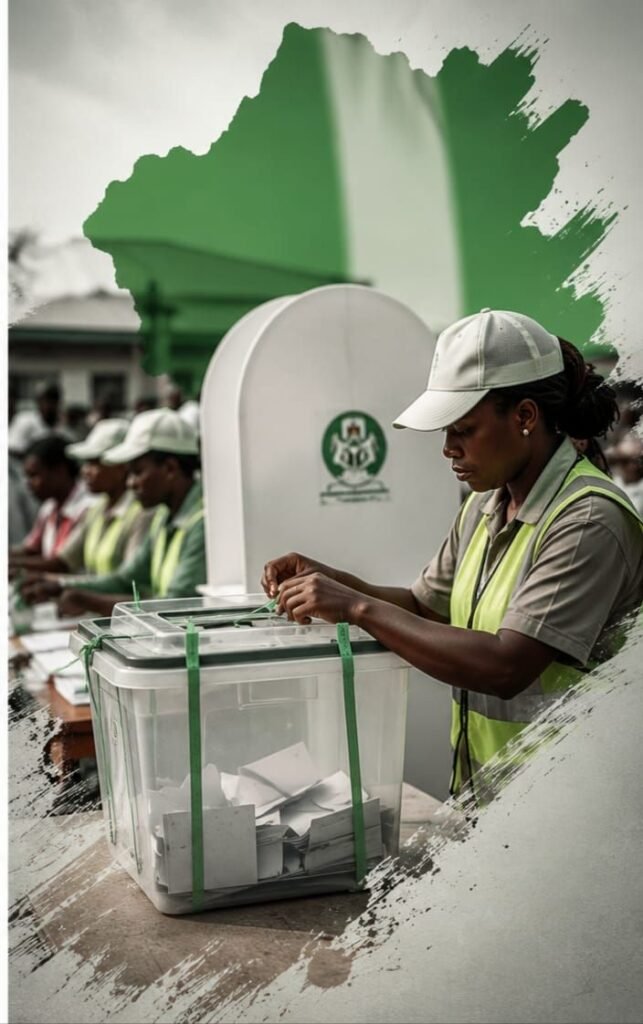
Then there is the Independent National Electoral Commission.
Before the election, there were concerns about INEC.
Could the commission withstand political pressure?
Could it remain neutral?
Could it resist the influence of the powerful?
Could it conduct an election where every vote would truly count?
These questions were important because INEC was not only conducting an election. It was also carrying the burden of public trust.
The commission had earlier identified about 385 flashpoints and 200 difficult terrains across the state as part of its risk assessment.
But promises are one thing.
What happens on election day is another.
So, was INEC under pressure?
Most likely, yes.
Any electoral commission conducting a closely fought election involving powerful political interests would face pressure.
But pressure does not automatically mean the commission surrendered to that pressure.
That is why the Osun election deserves to be watched carefully.
Was INEC truly independent?
Did it withstand political pressure?
Was it handicapped by federal influence?
Or did it simply do its job and allow the votes to speak?
These are questions that should continue to be examined by journalists, observers and civil society organisations.
Because democracy is not only about declaring a winner.
It is also about whether the people believe the process that produced the winner.
THE SECURITY AGENCIES: A ROUND OF APPLAUSE, BUT WITH QUESTIONS
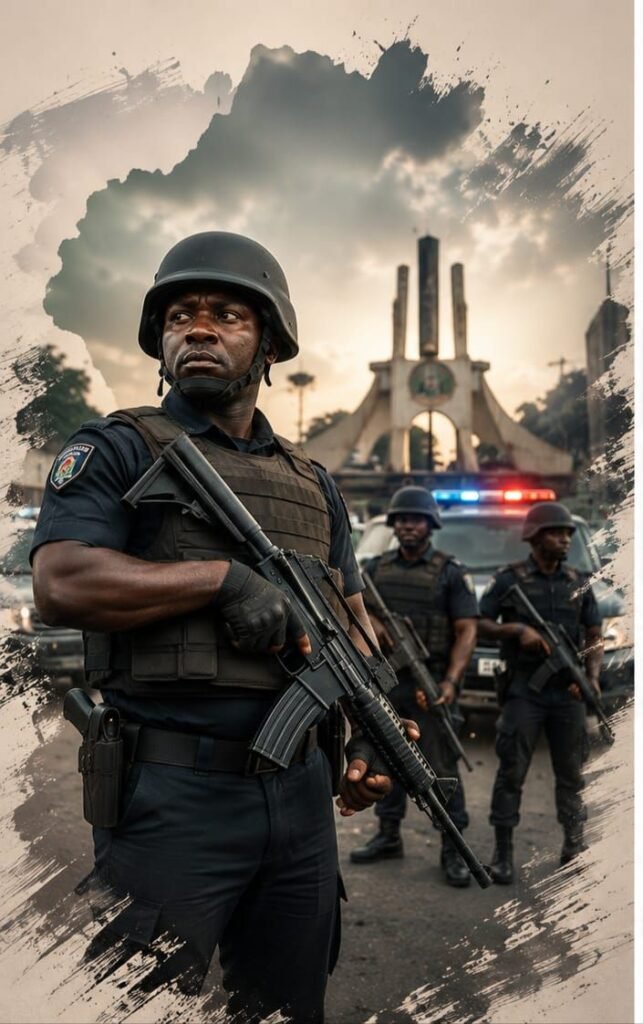
And then came the security agencies.
Given the level of tension before the election, security was one of the biggest concerns.
There had been political killings, attacks and allegations of intimidation before election day. The police leadership had publicly promised professionalism and impartiality, while INEC had also required security personnel deployed for the election to take an oath of neutrality.
More than 15,000 police officers, 30 Commissioners of Police, helicopters and drones were reportedly deployed for the election.
For that level of preparation, the security agencies deserve some credit.
Despite pockets of violence and tension reported in some areas, the election did not descend into the kind of widespread violence many feared.
But there were still troubling reports.
There was a report involving a security officer and alleged ballot-box snatching. However, the claim was not established. A fact-check of one viral incident connected to the election found that while the video captured a genuine confrontation involving security personnel and residents, the claim that a ballot box was actually snatched remained unverified.
That distinction is important.
In an election already surrounded by fear and suspicion, an allegation should not automatically become a fact.
The security agencies should therefore receive credit where they deserve it, but they must also answer questions where there are credible complaints.
That is how accountability works.
THE PEOPLE SPOKE
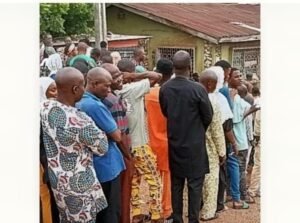
As results began coming in from polling units, wards and local government areas, something became clear.
Adeleke was ahead.
Then he won another local government.
And another.
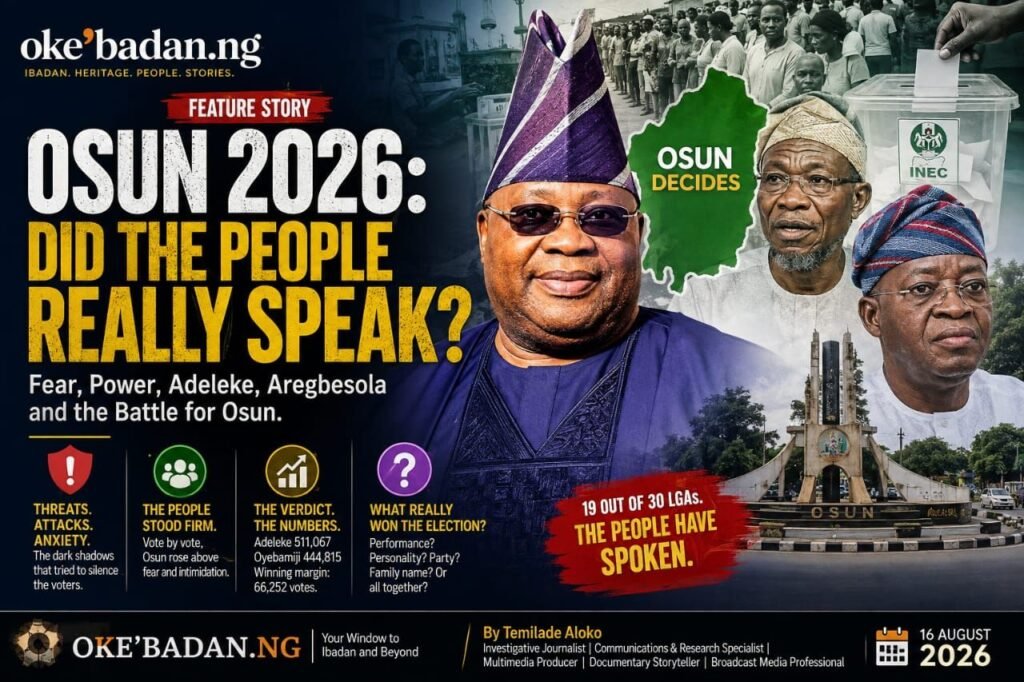
By the end of the collation, he had won 19 out of the 30 local government areas, while his main opponent, Bola Oyebamiji of the APC, won 11.
Adeleke polled 511,067 votes.
Oyebamiji scored 444,815 votes.
That gave the incumbent a winning margin of 66,252 votes.
The ADC candidate, Najeem Salaam, came third with 17,180 votes.
According to the final figures, Osun had 2,339,544 registered voters, with 1,010,684 accredited voters. There were 985,079 valid votes and 20,721 rejected votes, bringing the total votes cast to 1,005,800.
The result was clear.
Adeleke had won a second term.
But what exactly produced the victory?
SO, WHAT REALLY WON THE ELECTION?
Was it Adeleke’s personality?
Was it his performance?
Was it the Accord platform?
Was it the Adeleke family name?
Was it his relationship with the grassroots?
Was it the workers who remembered the payment of salary arrears?
Was it party structure?
Was it the influence of traditional rulers?
Was it the rejection of the APC?
Was it the fear of federal might?
Or was it simply the independent decision of the people?
Perhaps the answer is all of these together.
Elections are rarely decided by one factor.
One voter may support a candidate because of performance.
Another may support him because of his family.
Another because of his party.
Another because of a traditional ruler’s endorsement.
Another because of what he or she personally received from government.
And another may simply say:
“I like him.”
That is the beauty — and sometimes the complication — of democracy.
WHAT ABOUT AREGBESOLA?
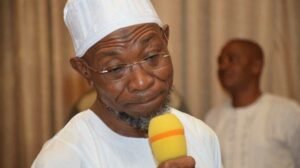
This election will not be complete without talking about Rauf Aregbesola, popularly known as Baba Afusa.
Haa!
Has his political relevance in Osun come to an end?
Perhaps not.
But the result certainly raises questions about the strength of his political influence today.
Najeem Salaam, the ADC candidate, was associated with the political camp around Aregbesola and had served as Speaker of the Osun State House of Assembly.
Yet, he finished third with only 17,180 votes.
Does this mean Aregbesola has lost his political relevance?
Not necessarily.
But it does suggest that political influence cannot be measured only by the name of the politician behind a candidate.
The people may respect a former governor and still vote differently.
And perhaps that is another message from Osun.
OSUN AND 2027
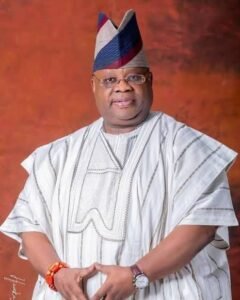
Immediately after Adeleke’s victory was announced, attention shifted to 2027.
Some people began telling President Tinubu to restrategise.
Some described Osun as a litmus test for the coming presidential election.
But should Osun automatically be treated as a prediction of 2027?
Perhaps not.
Nigeria is bigger than Osun.
The presidential election will involve 36 states and the Federal Capital Territory, different candidates, different alliances and different issues.
But Osun has certainly sent a political message.
It has shown that political power is never permanently owned.
It has shown that incumbency does not automatically guarantee victory.
It has shown that opposition parties can put up a serious fight.
And it has shown that voters can surprise political analysts.
ARE THE PEOPLE FINALLY AWAKE?
Perhaps the biggest story from Osun is not Adeleke.
It is the voter.
There was fear.
There were threats.
There were concerns about intimidation.
There were reports of violence.
Yet people still came out.
They stood in queues.
They waited.
They voted.
And they went home.
This raises a bigger question about Nigerian democracy:
Are the people finally beginning to understand the power of their votes?
For years, elections in Nigeria have been associated with fear, violence, vote buying and political manipulation.
But the ballot remains one of the few moments when an ordinary person can stand before the powerful and say:
“This is my choice.”
Perhaps that is what happened in Osun.
Perhaps the people really spoke.
And perhaps, for once, political calculations had to listen.
THE REAL WINNER
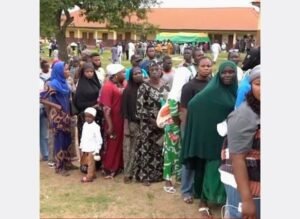
Governor Ademola Adeleke is the winner of the 2026 Osun governorship election.
But beyond Adeleke, APC, Accord, ADC, Aregbesola, Oyebamiji and all the political giants, there is another winner that should matter:
The people of Osun State.
And there is a lesson here for our politicians.
Election should never be a do-or-die affair.
No political position is worth the life of a human being.
No governorship seat is worth the blood of a voter.
No political party is worth killing for.
Because at the end of the election, politicians go home.
They return to their families.
They continue their lives.
But the person who loses his life because of an election does not get another chance.
So, one question keeps coming to my mind:
What is the gain of the person who died because of an election?
Nothing.
Democracy should not be a journey to the grave.
It should be a journey to better leadership.
Osun has spoken.
But did the people really speak?
Perhaps the answer lies not only in who won, but in why the people voted the way they did.
For Governor Ademola Adeleke, the victory is not the end.
It is a new responsibility.
The people have given him another four years.
They have also given him another opportunity to prove that their confidence was not misplaced.
And for the opposition, the message is equally clear:
The people are watching.
Congratulations to Imole.
But beyond the dancing, beyond the politics, beyond the victory song, the people of Osun are waiting to see what the next four years will bring.
My name is Temilade Aloko (Ahondiwura)
Investigative Journalist | Communications & Research Specialist | Multimedia Producer | Documentary Storyteller |Broadcast Media Professional
nanatem79@gmail.com
About The Author