
Special Seats Bill: Representation, Responsibility, and the Silence That Troubles
By Temilade Aloko
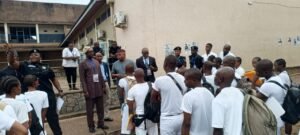
The recent solidarity march by Nigerian women to the National Assembly in support of the Special Seats Bill was widely described as historic, bold, and long overdue.
Women from different walks of life gathered with one clear demand — fairness, equity, and inclusion in governance.
The Nigeria Association of Women Journalists (NAWOJ) captured the mood powerfully, describing the march as “a defining moment in the fight for gender equity and democratic inclusion.”
NAWOJ Chairperson Aishatu Ibrahim called the bill a necessity rather than a privilege:
“The Special Seats Bill is not just a demand — it is a necessity for our democracy to thrive.”
Few would argue with that position.
Despite making up nearly half of Nigeria’s population, women remain significantly underrepresented in governance. Women currently occupy less than 5% of seats in the National Assembly. The last assembly had only two female senators — a reality that continues to expose the depth of gender imbalance in political representation.
Supporters of the Special Seats Bill insist the proposal is not about favouritism.
It is about correction.
The bill seeks to amend the Constitution by creating additional seats reserved exclusively for women:
37 seats in the Senate
74 seats in the House of Representatives
108 seats across State Houses of Assembly
These seats would be contested through elections and reviewed after 16 years.
Lady Ejiro Umukoro, Founder of LightRay! Media, reinforced the urgency of structural reform:
“Countries that improved women’s representation did not wait for change to happen naturally. They created systems that made inclusion possible.”
Rwanda, Senegal, South Africa, and Uganda are often cited as examples of how deliberate policies can rapidly transform representation.
But a Difficult Question Remains
While the advocacy continues to gather strength, an uncomfortable question quietly emerges — one that deserves honest reflection.
Are women already in positions of power matching the energy of those fighting for inclusion?
As a broadcaster and long-time advocate for women’s issues, I immediately recognised the importance of this debate. Determined to deepen the conversation, I spent nearly two weeks reaching out to female politicians.
The responses were polite, familiar, and predictable:
“I’m not in town.”
“This is not a good time.”
“I won’t be available.”
And then, silence.
Busy schedules are understandable. Patterns of disengagement are harder to ignore.
When Activists Speak Louder Than Office Holders.
Across Nigeria, passionate women — activists, journalists, civil society leaders — continue to carry the weight of advocacy for gender inclusion.
They organise.
They mobilize.
They protest.
They sustain momentum.
Yet, too often, those already occupying political offices appear noticeably absent from these conversations.
Oyo State offers a telling example.
The State House of Assembly currently has two female honourable members. The last assembly also had two. While the numbers remain small, representation alone does not guarantee impact.
Visibility, voice, and legislative engagement matter.
How frequently do female lawmakers speak publicly on women’s issues?
How actively do they engage the media?
How visibly do they align with advocacy movements pushing for gender reforms?
Public office is not a quiet entitlement.
Representation is not a passive achievement.
Representation Demands Voice
No one expects legislators to reveal political strategies or confidential deliberations. Governance is complex, and discretion is often necessary.
However, there is a meaningful difference between confidentiality and invisibility.
If women’s groups are marching, should female politicians not stand visibly with them?
If structural inclusion is being debated, should women leaders not shape the narrative?
If society is urged to embrace women’s leadership, should women leaders not demonstrate visible confidence in occupying that space?
Beyond Demanding Seats
NAWOJ National Secretary Wasilah Ladan rightly described the march as “just the beginning.”
Indeed, it must be.
The struggle for representation cannot rest indefinitely on activists alone. Sustainable progress requires alignment between advocacy and governance.
Women must not only seek seats.
They must claim voice.
Not only demand inclusion.
But embody responsibility.
A Moment for Reflection
The Special Seats Bill represents an important opportunity for Nigeria’s democracy.
But inclusion without engagement risks weakening the very cause it seeks to strengthen.
As NAWOJ declared:
“We will not relent. We will not retreat. We will not be silenced.”
Perhaps an equally necessary message must echo within political chambers:
Representation is not merely about occupying space. It is about inhabiting responsibility.
About The Author