
Who Cares for the Journalist? Why Nigerian Media Professionals Need Periodic Mental and Psychological Review
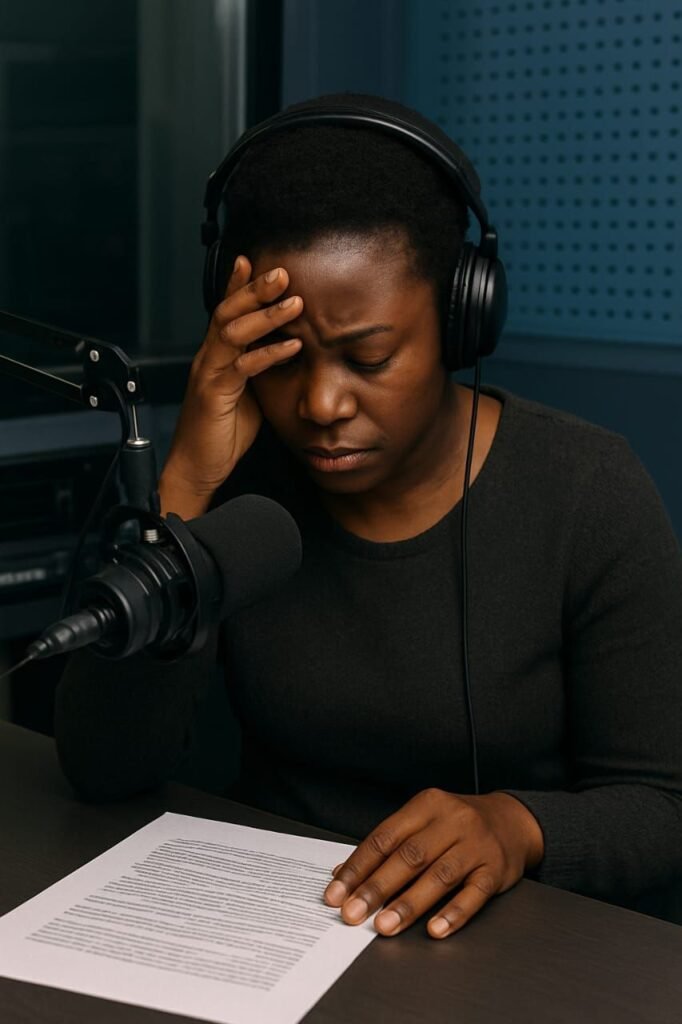
Every day, journalists and broadcasters across Nigeria carry the weight of the nation’s stories on their shoulders. We wake up early, stay up late, sift through painful headlines, interview grieving families, witness tragedy and confusion, and still show up with a straight face and a strong voice. Yet one question continues to echo: who cares for us?
Recently, I noticed how the burden of the news was affecting me personally. After reading certain disturbing stories, I found it difficult to sleep. I would wake up sad, drained, and moody throughout the day. It wasn’t until I paid attention that I realised the connection—my emotional state was reacting to the constant exposure to worrying news. And if I, as one journalist, feel this way, many of my colleagues are silently carrying the same emotional weight.
Over the last few weeks alone, we have reported heartbreaking incidents:
– the killing of Brigadier Uba in Borno State,
– the kidnapping of schoolgirls in Maga, Kebbi State,
– the attack on CAC in Eruku, Kwara State,
– the kidnapping of students at St. Mary Catholic School in Niger State.
And these are only a few. Story after story, crime after crime, people harming others, rising insecurity, large-scale corruption, and the constant feeling that those in power use politics, religion, and ethnicity to mislead citizens and divide us—all these realities pile up in our minds.
As journalists, we do not just report these events; we absorb them.
As mothers, fathers, siblings, or caregivers, we imagine what the families of victims feel. I, for one, cannot read about abducted children without picturing the mothers who are living through that nightmare. It is simply too much for the human heart to swallow.
Yet despite the emotional pressure, journalists are expected to stay composed, objective, and “strong.” But we are human beings before we are professionals. The truth is: we cannot pour from an empty cup. Continuous exposure to trauma, conflict, deceit, and injustice can quietly harm our mental well-being.
This is why periodic mental and psychological reviews are no longer optional—they are necessary. We need intentional support systems within newsrooms:
emotional debriefing after reporting distressing stories,
access to counselling,
breaks from traumatic beats,
safe spaces to express how the news affects us,
newsroom policies that acknowledge mental fatigue.
Journalists give voice to the voiceless, hold leaders accountable, and inform the public. But our own struggles are often invisible. We are expected to carry the nation’s pain and still smile into the microphone.
It is time to care for the people who care for the news.
A healthier, emotionally supported media profession is essential for a healthier society.
About The Author